
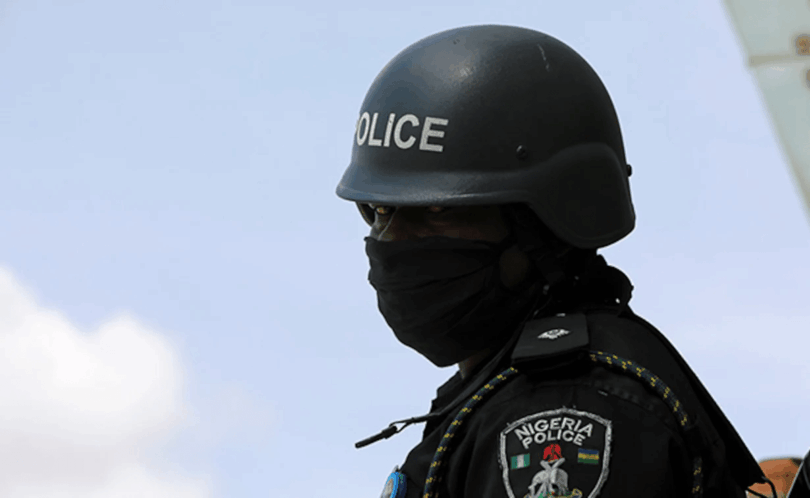

Retired Assistant Inspector General of Police (AIG), Wilson Inalegwu, has cautioned that the proposed state police system in Nigeria will fail if it is populated by political thugs, vigilante members or loyalists of political parties.
Speaking on Channels Television’s The Morning Brief on Monday, June 29, the former Kogi State Commissioner of Police said the success of state police would depend on a transparent recruitment process that guarantees professionalism, competence and political neutrality. “We are praying that they will not use members of vigilante, members of thugs, supporters of political parties or individuals to form the new class of this police force,” Inalegwu said.
While acknowledging that the establishment of state police would boost manpower and strengthen policing across the country, he warned that the greatest risk lies in how the proposed force is constituted. According to him, recruiting individuals with partisan affiliations or vigilante backgrounds would undermine the credibility of state police and transform it into a tool for political interests instead of public service.
Drawing from Nigeria’s history, Inalegwu recalled concerns raised during the era of the Native Authority Police. “Majority of the police in the native authority were formed from supporters of political parties and were formed from thugs and that was a fear that was expressed in 1958 where the minorities expressed fear,” he said.
He stressed the need for transparent recruitment, strict professional standards and effective oversight mechanisms to ensure state police operate within the law and remain accountable. The retired police chief also defended the Nigeria Police Force, arguing that its challenges stem primarily from inadequate funding, insufficient manpower and poor logistics rather than incompetence.
“The Nigerian police staff today is grossly underfunded and logistics are not provided, otherwise the Nigerian police force is a fantastic organization, it is competent and able to do the job of policing in Nigeria,” he said. According to Inalegwu, the force remains structurally capable of carrying out its constitutional responsibilities but has been hampered by years of underfunding and inadequate operational support.
He said shortages in personnel, equipment and logistics have left officers overstretched and under-equipped, adding that improved investment in manpower, infrastructure and officers’ welfare would significantly enhance the force’s effectiveness and restore public confidence.
The retired AIG also expressed concern about the country’s institutional capacity, warning that state police could become vulnerable to political interference if governance structures remain weak. “Our institutions are very weak and are not strong enough to withstand the torment of desperate politicians,” he said.
He maintained that strong institutions are essential to prevent state-controlled police forces from being used as instruments of intimidation instead of impartial law enforcement. Highlighting the importance of policing to national development, Inalegwu said an effective and well-resourced police force is critical to Nigeria’s progress.
“The police is a critical institution, an institution that has primacy on internal security, on public management, on crime prevention. This is a critical institution worldwide and by the time we begin to have an effective police force that is catered for, the development of Nigeria will begin to rise. Nigeria will only develop with an effective police force,” he said.
His comments come days after the Senate defended the passage of the Constitution of the Federal Republic of Nigeria (State Police) Bill, 2026. Senate Leader Opeyemi Bamidele described the proposed legislation as “a child of necessity rather than political expediency” and “a product of national consensus, not cynicism.”
In a statement, Bamidele said the establishment of state police has become an urgent national priority in response to Nigeria’s growing security challenges, adding that the proposal has evolved over time rather than being a recent initiative. Despite criticism from some quarters, the Senate leader expressed confidence that the bill enjoys broad public support and would significantly improve security across the country’s states if eventually implemented.